Why Your ABM Fails Without LinkedIn Ads

How ABM 2.0 uses signals, systems, and "Bridge Ads" to turn intent into pipeline, treating LinkedIn not as another channel but as a continuous activation layer.
The Hard Truth About Most ABM Programs
Account-Based Marketing (ABM) has been part of B2B for over a decade. On paper, it sounds perfect: focus on high-value accounts, personalize messaging, align sales and marketing, and win bigger deals.
Yet in reality, many ABM programs fail. Not slowly. Not quietly. They fail expensively. Teams spend months building account lists, researching personas, writing outreach sequences, and running SDR campaigns, and then come the replies that never arrive, the engagement that never moves, and the pipeline that never builds.
“ABM doesn't fail because targeting is wrong. ABM fails because activation is missing.”
This blog explains why ABM 1.0 breaks, how ABM 2.0 fixes it, and why LinkedIn Ads are not optional, but foundational, to modern ABM execution.
Why Traditional ABM (ABM 1.0) Breaks
Classic ABM follows a familiar playbook. It assumes buyers will respond to direct outreach, that email plus SDR effort is enough, and that sales can "create demand." That assumption no longer holds.
What ABM 1.0 Looks Like
- Download a list of "target accounts."
- Upload them into a CRM.
- Find contacts using LinkedIn Sales Navigator.
- Send cold emails and LinkedIn messages.
- Wait for replies.

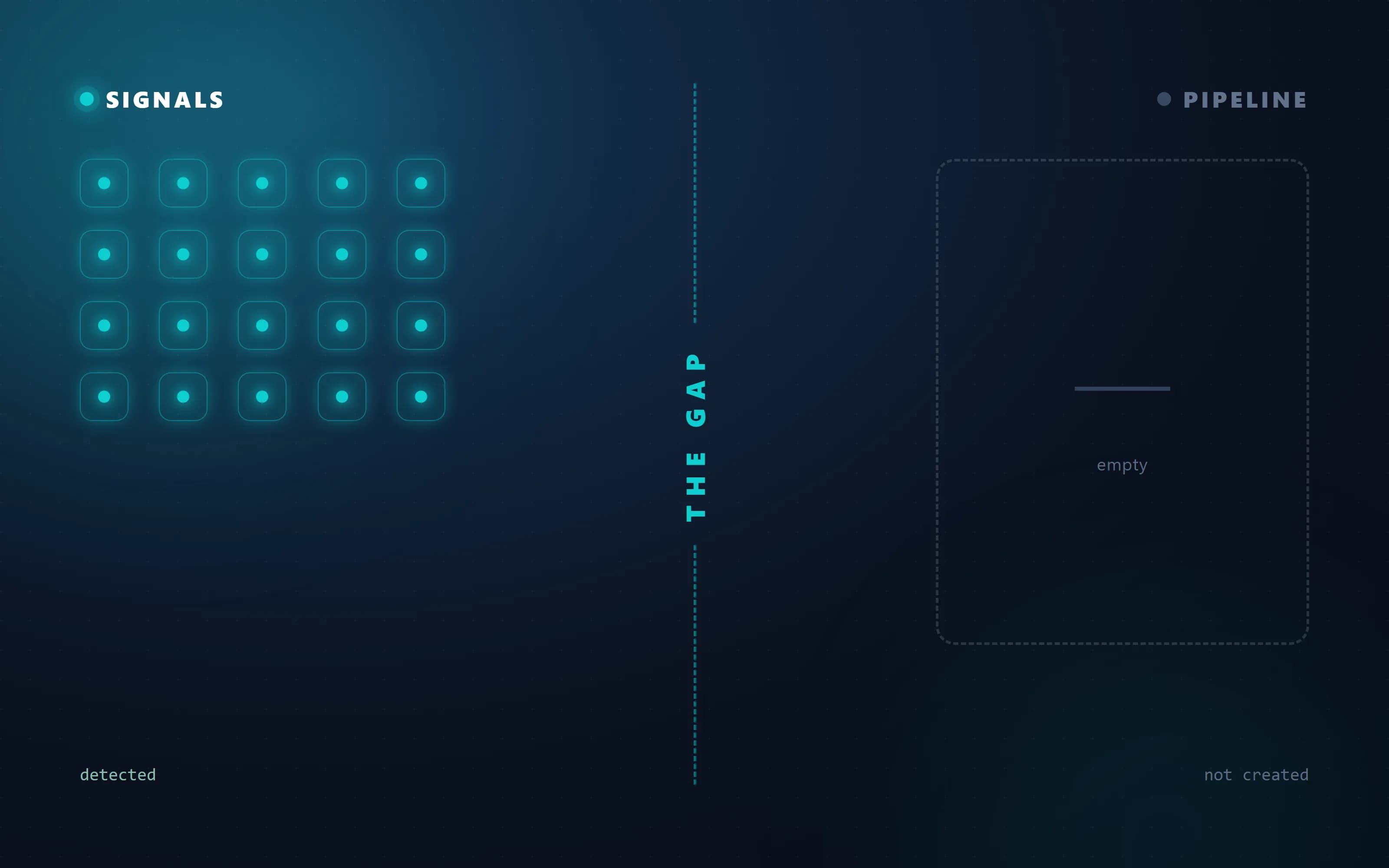
The ABM 1.0 Gap: Where Intent Goes to Die
ABM 1.0 suffers from a fundamental flaw: it has no continuous activation layer. Let's break down the core failures.
1. Static Account Lists
- ABM 1.0 relies on fixed account lists, quarterly updates, and manual prioritization.
- But buyers don't operate on your planning cycles. Intent is dynamic. Lists are static.
- This mismatch creates wasted effort.
2. Siloed Outreach Channels
- Sales runs email and SDR outreach, marketing runs ads, and data lives in the CRM, but none of these systems talk properly.
- The result: outreach and ads are disconnected, buyers experience fragmented messaging, and intent signals are ignored or delayed.
- Forrester identifies siloed revenue teams as one of the biggest blockers to B2B growth efficiency.
3. CRM Data Is Underused for Ads
- Most CRMs contain leads, opportunities, customers, closed-lost deals, and lifecycle stages.
- Yet ABM 1.0 rarely uses this data for ad targeting, retargeting, or deal acceleration.
- That's a massive missed opportunity.
4. Email and SDR Outreach Doesn't Scale
- Cold outreach worked when inboxes were less crowded, buyers had fewer options, and personalization was novel.
- Today buyers ignore most cold emails, SDR teams burn out, and scaling means hiring more people.
- This is not a sustainable growth model.

Introducing ABM 2.0: From Lists to Living Systems
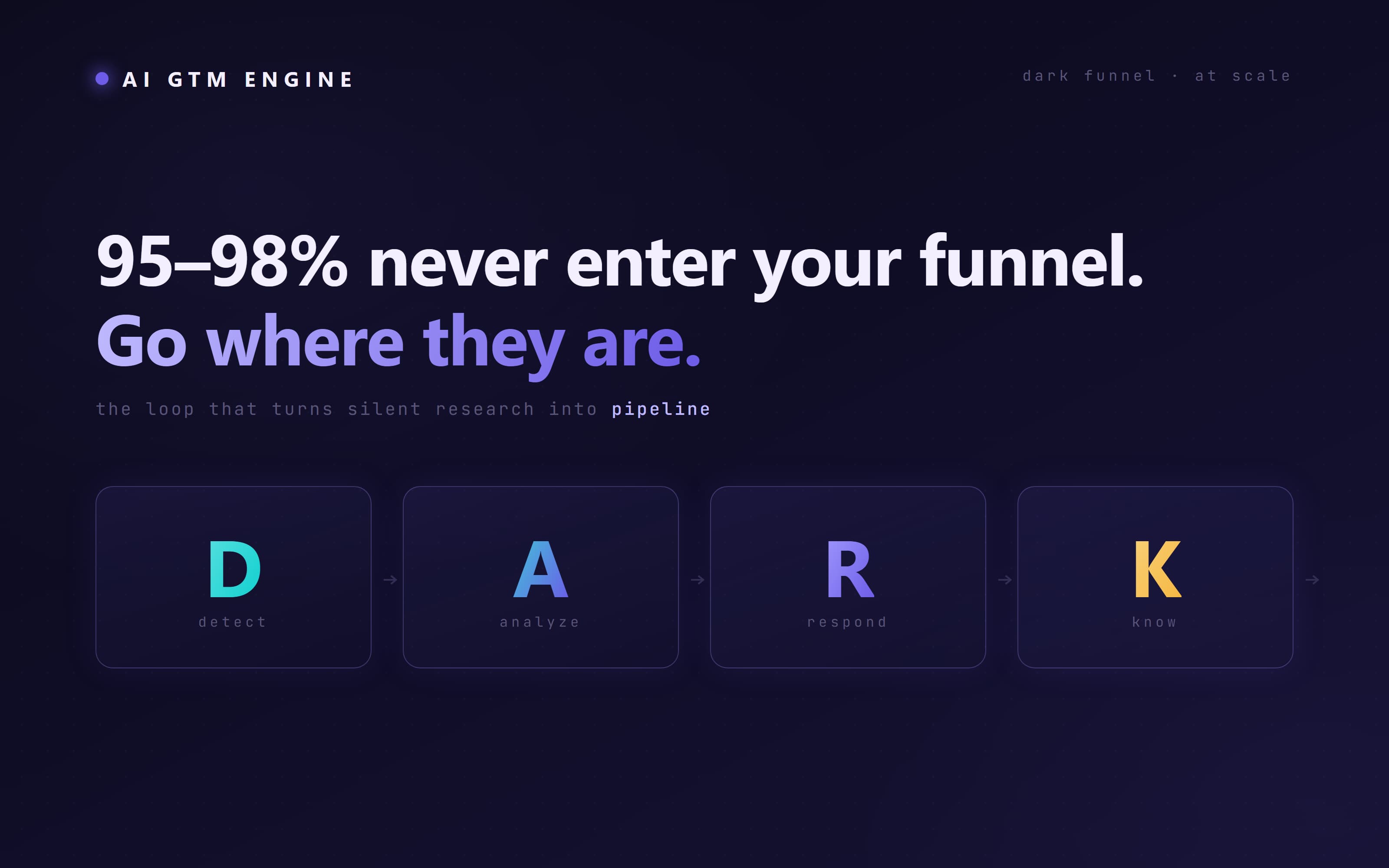
ABM 2.0 is not "better ABM tactics." It's a different operating model. It is signal-led, data-synced, ad-activated, and pipeline-focused.
Instead of asking "Who should we target this quarter?" ABM 2.0 asks: "Which accounts are showing intent right now, and how do we stay visible?"
Signals are observable behaviors that indicate buyer intent. Examples include:
- Visiting G2 profiles
- Repeated pricing page visits
- Hiring for specific roles
- Using free or trial product features
- Engaging with ads or content
Gartner confirms that intent data can identify buying behavior weeks or months earlier than traditional lead capture. ABM 2.0 is built around these signals.
Why LinkedIn Ads Are the Cornerstone of ABM 2.0
LinkedIn is unique because it is B2B-first, based on verified professional data, and continuously updated by users themselves.

- LinkedIn knows where someone works, their role, and their seniority.
- It tracks their job changes and their professional interests.
- No other platform provides this level of accuracy for B2B targeting.
- You can target specific companies, specific roles within them, and reach entire buying committees.
- You stay visible even when buyers don't reply.
The "Bridge Ads" Concept: The Missing Link in ABM
Bridge Ads use LinkedIn as a bridge between buyer signals, internal data systems (CRM / CDP), sales execution, and revenue outcomes. Instead of ads being a separate channel, they become an activation layer.
How Bridge Ads Work (Simple Flow)
- Signal Detected.
- G2 visit
- Website engagement
- Product usage
- Hiring activity
- Data Enriched & Synced.
- Signal pushed to CRM / CDP
- Account identified and scored
- Ad Activation.
- LinkedIn Matched Audience created
- Role-specific ads launched
- CRM Feedback Loop.
- Engagement data synced back
- Messaging and targeting optimized
This loop runs continuously.
Why Ads Matter Even When Sales Is Active
A common objection: "Why run ads if SDRs are already reaching out?" Because buyers don't respond immediately, but they notice.
LinkedIn ads:
- Build familiarity
- Reinforce credibility
- Reduce cold-start friction
- Support outbound timing
By the time sales reaches out again, the buyer already recognizes your brand. This effect dramatically improves response rates and deal velocity.

ABM 2.0 Workflow Examples (From the Webinar)
These four patterns show how signals flow into LinkedIn activation in practice.
Example 1: G2 Intent to LinkedIn Ads
- Signal: A target account visits your G2 profile.
- Action: Sync the account to a LinkedIn Matched Audience and run ads highlighting G2 reviews and ratings.
- Why it works: You meet buyers exactly where they are researching alternatives.
Example 2: CRM Match + Similar Companies
- Signal: Your CRM contains closed-won customers, high-intent prospects, and closed-lost deals.
- Action: Upload the CRM list to LinkedIn, use similar company APIs, and expand targeting to high-probability lookalikes.
- Why it works: This scales ABM without losing precision.
Example 3: CDP Behavioral Data to Dynamic Ads
- Signal: Free users repeatedly view paid features.
- Action: Create a dynamic CDP segment, sync it to LinkedIn, and run upgrade-focused ads.
- Outcome: Ads feel timely, not pushy.
Example 4: Web Visitor Intent to Ads + SDR Alert
- Signal: An anonymous visitor from a target account repeatedly visits pricing.
- Action: Identify the company via intent tools, trigger LinkedIn retargeting, and alert the SDR with context.
- Why it works: This is coordination, not guesswork.
The ABM 2.0 Tech Stack (Simplified)
ABM 2.0 is not about having more tools, it's about integration. The value comes from how these systems talk to each other.
Core layers:
- CRM / CDP: HubSpot, Salesforce, Segment
- Intent Data: G2, Factors, Leadfeeder, 6sense
- Activation: LinkedIn Ads
- Attribution: CRM + analytics
Measuring ABM 2.0 Success: Pipeline, Not Clicks
One of the biggest mindset shifts is what you choose to measure. ABM 1.0 tracked CTR, CPC, opens, and replies. ABM 2.0 tracks what actually matters to revenue.
ABM 2.0 Metrics That Matter
- Pipeline created instead of click-through rate
- Deal velocity instead of cost per click
- Opportunity conversion instead of email opens
- Revenue influenced instead of reply counts

LinkedIn itself emphasizes that ABM success should be measured by pipeline impact, not vanity metrics.
Best Practices for Enterprise ABM Execution
Drawn directly from the webinar, these habits keep the activation layer healthy:
- Refresh audiences daily via automation.
- Sync CRM lifecycle stages to LinkedIn.
- Use role-based messaging for buying committees.
- Leverage LinkedIn Document Ads and Conversation Ads.
- Exclude customers automatically when appropriate.
- Align sales outreach timing with ad exposure.
“Consistency beats creativity.”
Why ABM Without LinkedIn Ads Will Continue to Fail
The contrast is stark once you put the two states side by side.
Without LinkedIn Ads
- Intent fades unnoticed.
- Outreach feels cold.
- Sales works harder for less impact.
- ABM remains manual and unscalable.
With LinkedIn Ads
- Buyers see you before replying.
- Signals turn into momentum.
- Sales enters warm conversations.
- ABM becomes a system, not a project.
Final Takeaway
ABM doesn't fail because teams lack effort. It fails because activation is missing, signals aren't acted on, and systems aren't connected.
Turn buyer signals into pipeline, not silence
We help B2B teams connect intent data, CRM, and LinkedIn Ads into one continuous activation layer, so your ABM becomes a system instead of a project.
Ready to turn signals into booked pipeline?
Book a discovery call and we’ll map out how a signal-led GTM system can accelerate your revenue.