Why Businesses Are Moving Beyond Generic AI Tools

For business leaders and growth teams who want AI to actually improve real workflows — not just add another disconnected tool.
Everyone says they are using AI now
Everyone says they are "using AI" now. But when you look closer, most businesses are not actually transforming how they operate. They are layering generic tools on top of messy systems and hoping automation alone will create an advantage.
It usually does not.
A team adds a chatbot. Experiments with AI-generated content. Plugs in a forecasting tool or two. For a while, it feels innovative. Then the limitations show up. The outputs are too broad. The workflows do not fit. The data is disconnected. The tool solves part of the problem — but not the actual bottleneck holding the business back.
That is where the gap starts to widen between companies that are merely adopting AI and companies that are building real leverage with it.
The issue is not whether AI matters. It clearly does. The issue is whether a generic AI layer can support the complexity, nuance, and internal logic of a real business.
This is why more companies are moving beyond off-the-shelf AI tools and investing in custom AI systems built around their own data, processes, and growth goals. This article covers what is driving that shift, where most teams get it wrong, and how to approach custom AI in a practical, results-focused way.
“The issue is not whether AI matters. It is whether a generic AI layer can support the complexity, nuance, and internal logic of a real business.”
What is custom AI development?
Custom AI development refers to the process of designing, building, and deploying artificial intelligence systems tailored to a specific organization's needs. Unlike generic AI tools that provide standardized features, custom AI solutions are built to solve unique business problems, integrate with existing systems, and leverage proprietary data.
Examples of custom AI implementations include:
- AI-powered recommendation engines for eCommerce
- Predictive analytics models for sales forecasting
- Automated lead qualification systems for B2B companies
- AI-driven customer support chatbots trained on proprietary knowledge
- Intelligent document processing systems
By building AI specifically for their workflows, companies unlock significantly more value than what generalized AI platforms provide — because the intelligence is shaped around what makes their business unique.

Why generic AI is not enough
Artificial intelligence has become a serious part of modern business operations — automation, predictive analytics, customer support, content generation, workflow acceleration. That sounds like progress. In many ways, it is.
But there is a problem hiding underneath the excitement: most generic AI tools are built for broad use cases, not specific business realities.
A generic platform may help a company draft content, summarize conversations, or automate simple tasks. But once the business tries to apply AI to its own internal workflows, things get complicated fast. The tool may not fit the company's process. It may not connect with existing systems. It may not understand internal context or use proprietary data effectively. And it often creates one more layer of fragmented software instead of improving the operating model.
That has real business consequences: adoption slows, teams build workarounds, data stays siloed, automation stays shallow. Leaders spend money on innovation without getting operational lift in return.
This matters now because businesses have moved past the experimentation phase. The question is no longer whether to try AI. It is how to make AI useful enough to improve performance, efficiency, and decision-making at scale. That is precisely where generic tools begin to fall short.

How most teams get this wrong
Most organizations approaching AI transformation make the same predictable mistakes. Pattern recognition matters here — if you can see these before they happen, you can avoid them.
The five mistakes to avoid
- Buying tools before defining the problem. Teams select AI platforms based on demos, competitor pressure, or vendor pitches — before identifying which specific workflow or outcome they are trying to improve. The result is technology in search of a problem.
- Treating AI like software you install and forget. Generic AI tools are purchased, onboarded, and left to run. Custom AI requires ongoing refinement, retraining, and integration. Organizations that skip this planning end up with systems that degrade over time.
- Ignoring the data foundation. No AI system is better than the data it learns from. Companies that invest in AI without auditing data quality, accessibility, and structure consistently underperform. Garbage in, garbage out — still the most underestimated rule in AI.
- Siloing AI within a single team. AI that lives only in one department rarely scales. The biggest gains come from AI embedded across workflows, informed by cross-functional data, and aligned to company-wide priorities.
- Measuring the wrong outcomes. Teams often measure AI success by activity metrics — logins, queries, time saved per task — rather than business outcomes like conversion rate, retention, cost per acquisition, or revenue per employee.

How to build custom AI that works
Custom AI development does not require a massive upfront investment or a team of data scientists. It requires a clear process. Here is a five-step framework teams can follow.
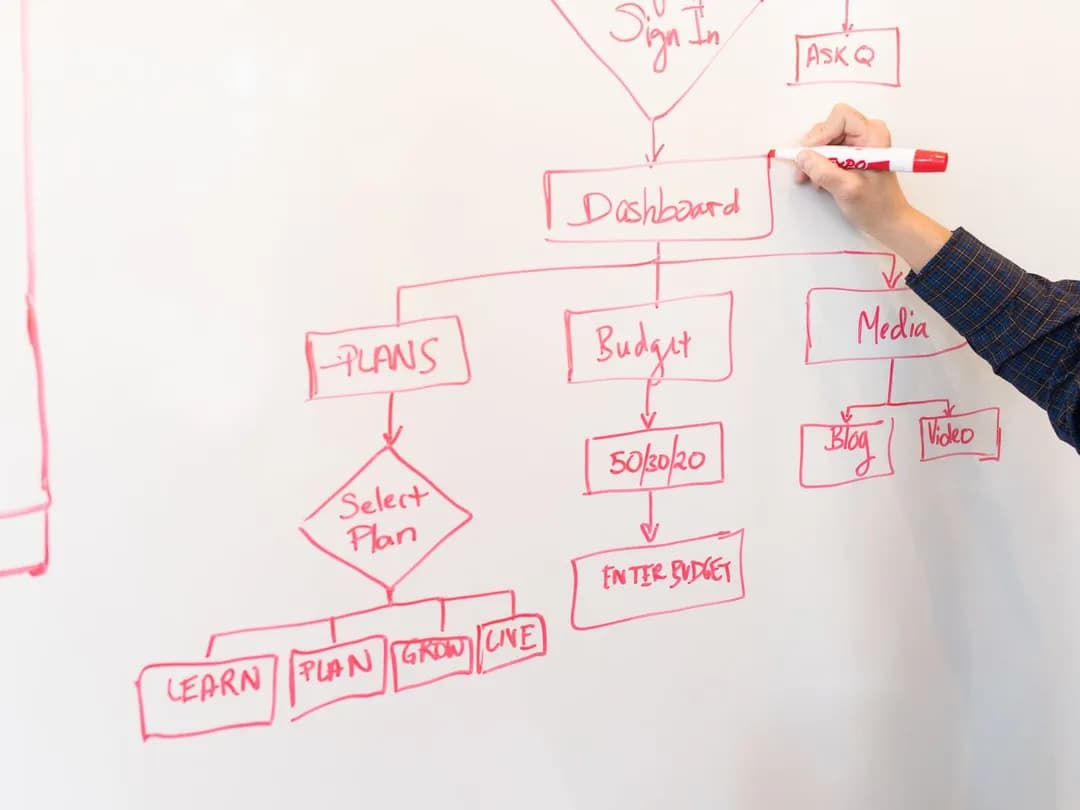
A five-step framework
- Start with one specific business problem. Do not try to transform everything at once. Identify a single workflow where the gap between current performance and desired outcome is measurable and painful — sales conversion rates, support ticket resolution time, inventory forecasting accuracy. Pick something concrete.
- Audit what data you already have. Before any build begins, map the data that exists: what it covers, how clean it is, where it lives, and who owns it. Custom AI is only as powerful as the data it runs on. This step is often skipped and almost always regretted.
- Design for integration, not addition. The AI system should slot into existing workflows, not create new ones. If your sales team uses a CRM, the AI should surface insights inside that CRM. Adoption follows friction removal.
- Build incrementally and measure relentlessly. Start with a minimal viable version. Establish baseline metrics before launch. Track outcome-level improvements — not just activity. Iterate based on real performance data, not assumptions.
- Plan for maintenance as a feature, not a cost. AI systems require ongoing attention. Models drift. Data changes. Business priorities shift. Teams that treat post-launch maintenance as part of the investment consistently get better long-term results.
Custom AI in B2B sales
A mid-market B2B software company was struggling with a common problem: their sales team had a large pipeline but poor conversion rates. Reps spent significant time qualifying leads manually, and there was no consistent way to prioritize outreach.
The Problem. Lead volume was high. Signal quality was low. Reps were spending roughly 40% of their selling time on leads that had low intent and poor fit — costing the business in both revenue and rep capacity.
The Action. Rather than buying a generic lead scoring tool, the company built a custom AI model trained on three years of their own CRM data — closed-won deals, closed-lost deals, engagement patterns, company attributes, and behavioral signals from their product and website. The model was embedded directly into their CRM, surfacing a priority score and key reasoning for each lead.
The Result. Within two quarters, rep time spent on low-intent leads dropped by over 30%. Pipeline-to-close conversion improved meaningfully. More importantly, the model continued improving as new data was added — something a generic tool could not replicate, because it was trained on their data, not someone else's.
The competitive advantage was not the AI itself. It was the AI trained on their history, embedded in their process.
What the custom model delivered
of selling time was being lost to low-intent, poor-fit leads before the build
drop in rep time spent on low-intent leads within two quarters
of proprietary CRM data the model was trained on
“The competitive advantage was not the AI itself. It was the AI trained on their history, embedded in their process.”
Implications for leaders and teams
If you are in a leadership role evaluating AI strategy, here is what this shift means for how you should be thinking.
Stop doing this:
- Evaluating AI tools in isolation from the workflows they are supposed to improve
- Measuring AI success by adoption rates instead of business outcomes
- Delegating AI strategy entirely to IT or a single department
- Waiting for a "perfect" data environment before starting
- Identify two or three high-impact workflows where poor data, manual effort, or slow decisions are costing growth
- Build a cross-functional AI working group that includes operations, data, and the business unit closest to the problem
- Establish outcome baselines before any AI project launches, so you can measure real impact
- Treat custom AI as infrastructure investment, not a one-time software purchase

How to mitigate the risks
Custom AI development is not without trade-offs. It is worth addressing the most common concerns directly.
Answering the four common objections
- "It is too expensive." Custom AI does not have to mean a multi-million-dollar infrastructure project. Starting with one focused use case — a single model, one data source, one integration point — can deliver measurable ROI before any broader expansion. The cost of doing nothing is also a cost: in efficiency, in missed revenue, in competitive positioning.
- "We do not have enough clean data." Very few organizations do at the start. The solution is not to wait — it is to define what clean looks like, invest in data hygiene as part of the project, and start with the best available data while building the infrastructure to improve it over time.
- "We do not have internal AI expertise." Most companies that successfully implement custom AI partner with external expertise while building internal capability gradually. The critical requirement is not a large in-house AI team — it is clear business ownership of the problem and outcomes, with technical partners who can execute.
- "What if the model gets it wrong?" All AI systems produce errors. The goal is to build feedback loops that catch mistakes early, keep humans in the loop for high-stakes decisions, and continuously improve the model over time. A well-designed custom system with human oversight is more reliable than a generic tool with no feedback mechanism.
The shift is already underway
Generic AI tools can be useful for surface-level tasks. But they rarely create the kind of lasting operational advantage that moves the business forward. Custom AI — built around proprietary data, embedded into real workflows, and measured against real outcomes — is a different kind of investment. It is slower to build and requires more discipline. But the compounding advantage it creates is harder to replicate.
The teams that win with AI will not just use more tools. They will design smarter systems around how their business actually works.
The shift is already underway. The question is not whether your organization will move in this direction. It is how soon, and with how much intention.
Ready to build AI that actually fits your business?
If you are evaluating where AI can create real business impact, start with one workflow that is slowing growth, efficiency, or decision-making — and build from there. Let us discuss where custom AI can create the most value for your team.
Ready to turn signals into booked pipeline?
Book a discovery call and we’ll map out how a signal-led GTM system can accelerate your revenue.