The GTM Playbook for IT Services & Staffing Companies

Most IT services and staffing teams don't have a sales problem. They have a GTM architecture problem. Here's the signal-led playbook that fixes it.
A few days ago, I was on a call with an IT services founder. His company had been around for eleven years, with a good reputation and a solid delivery team. But he had one problem that wouldn't go away.
"We're entirely dependent on referrals. The moment I try to build outbound, it falls flat. We send emails, and nobody replies. We run LinkedIn ads, but nothing converts. I don't understand what we're doing wrong."
Sound familiar?
Here's what we told him, and it's the same thing I'll tell you. You don't have a sales problem. You have a GTM architecture problem.
Why IT Services & Staffing GTM Is Broken
Let me be direct. Most IT services and staffing companies are running a GTM motion that was designed for 2015. Cold lists. Generic email sequences. LinkedIn connection requests with a pitch in message number two.
You have to understand that your buyers have changed, but you are still on the same GTM process.
The selling-time gap
of a rep's week is spent on actual selling
goes to admin, research, data entry, and chasing information
Sales reps today dedicate only 28-30% of their week to actual selling. The other 70% goes to non-selling tasks such as admin, research, data entry, and chasing information across tools. And when they do reach out?
They're reaching out to the wrong accounts, at the wrong time, with the wrong message. That's not a people problem. That's a system problem.

“Most IT services companies don't have a sales problem. They have a visibility problem. They can't see who's ready to buy, so they spray and pray instead.”
The Three GTM Problems Specific to IT Services & Staffing
Before you can fix the motion, you have to name the failure modes. Three problems show up again and again in this market.
Mistake 01 — You Look Like Everyone Else
- When a CTO or VP of Engineering gets 40 cold emails a week, and 38 of them say "we provide dedicated developers at competitive rates," you're invisible.
- IT services are one of the most commoditized markets in B2B. If your GTM message is built around capabilities, tech stack, team size, and delivery model, you're competing on a playing field where nobody wins except on price.
- The companies that break through lead with outcomes, not capabilities.
- Capability pitch: "We build React apps." → Outcome pitch: "We help fintechs cut time-to-launch by 40%."
- Capability pitch: "We staff IT talent." → Outcome pitch: "We place senior engineers in 11 days, no markup."

Mistake 02 — You're Targeting the Wrong Signal
- Most IT services teams prospect based on company size, industry, and job title. That's a starting point. It's not a buying signal.
- A company that just raised a Series B? That's a signal.
- A company posting three open engineering roles for sixty days? That's a signal.
- A CTO who just joined a new company rebuilding the tech team? That's a signal.
- The moment matters more than the message. Are you tracking moments, or just lists?
Mistake 03 — Your Sales Cycle Is Too Long Because You're Entering Too Late
- Here's the brutal truth about IT services deals. By the time a prospect agrees to a discovery call, they've already talked to two or three other vendors.
- They've asked peers for recommendations. They've checked your Clutch and G2 reviews. They've looked at your LinkedIn company page.
- You think you're at the beginning of the conversation. You're actually in the middle of it. You think it's step 1. It's step 7.
What a Modern GTM Looks Like for IT Services & Staffing
Here's the playbook. Five components. Every one of them matters.

1. Build a Signal-Led Prospecting System
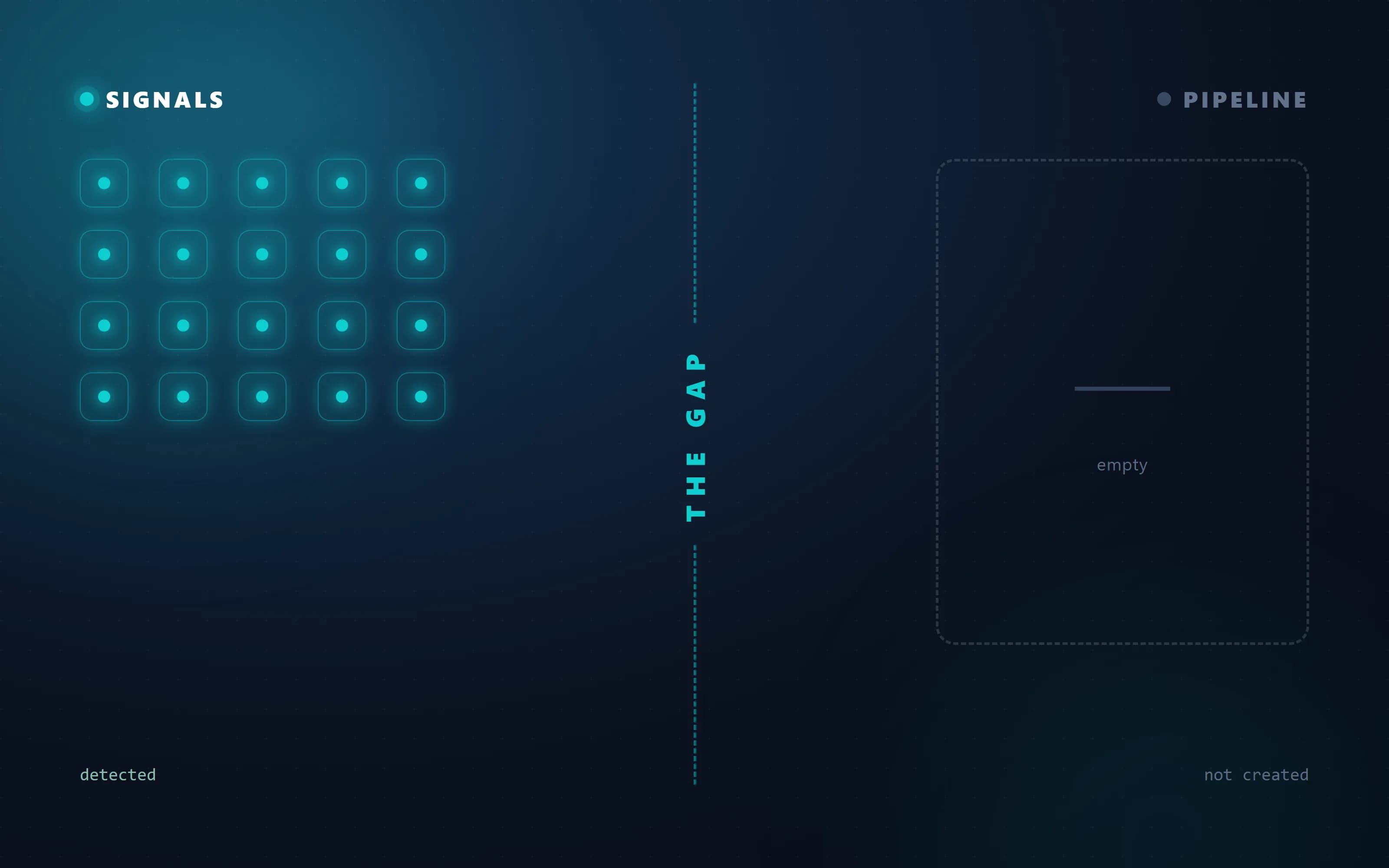
- Stop prospecting from static lists. Start prospecting from buying signals. Each signal tells you what's happening and what your move should be:
- Multiple open tech roles = hiring pain is real right now → reach out referencing the role.
- Series A/B funding closed = budget unlocked, scaling fast → pitch speed and delivery capacity.
- New CTO/VP Eng hired = new leader means new vendor decisions → be first in their inbox.
- Tech stack change posted = platform shift underway → send a relevant case study.
- Expanding into a new market = need tech talent fast → lead with domain experience.
- Track signals at scale using Clay, Apollo, LinkedIn Sales Navigator, and Bombora.
- Three signals from one account? That's your window. Move fast.
2. Fix Your ICP Before You Fix Your Outreach
- I see this mistake constantly. Teams spend weeks perfecting email sequences when the real problem is that they're talking to the wrong people entirely. Ask yourself honestly:
- Which of your existing clients closed fastest?
- Which ones had the highest lifetime value?
- Which ones referred you to others?
- Now look at what they had in common. Industry. Company stage. Team size. The problem they were solving when they hired you.
- That intersection is your real ICP. Build your GTM around that, not around "any company that needs developers."


3. Stop Selling Services. Start Selling Outcomes.
This is the hardest shift for IT services founders to make. But it's the most important one. Your buyers don't want to hear about your delivery methodology.
They want to know:
- How fast can you actually get someone productive?
- Have you done this in my industry before?
- What happens when things go wrong?
- What does success look like six months from now?
Answer those questions in your outreach before they even ask them, and you'll stand out from 90% of your competition.
Old way vs. new way
- "We provide dedicated development teams" → "We helped a fintech reduce time-to-hire by 60%."
- "Our rates are competitive" → "Our clients save an average of $40K per hire."
- "We have 200+ engineers on bench" → "We've placed engineers at 3 companies in your space."
- "Let's jump on a call to discuss your needs" → "I noticed you're hiring for X — here's how we solved that."
- Capability-first messaging → Outcome-first, signal-triggered outreach.
4. Build Your Dark Funnel Presence
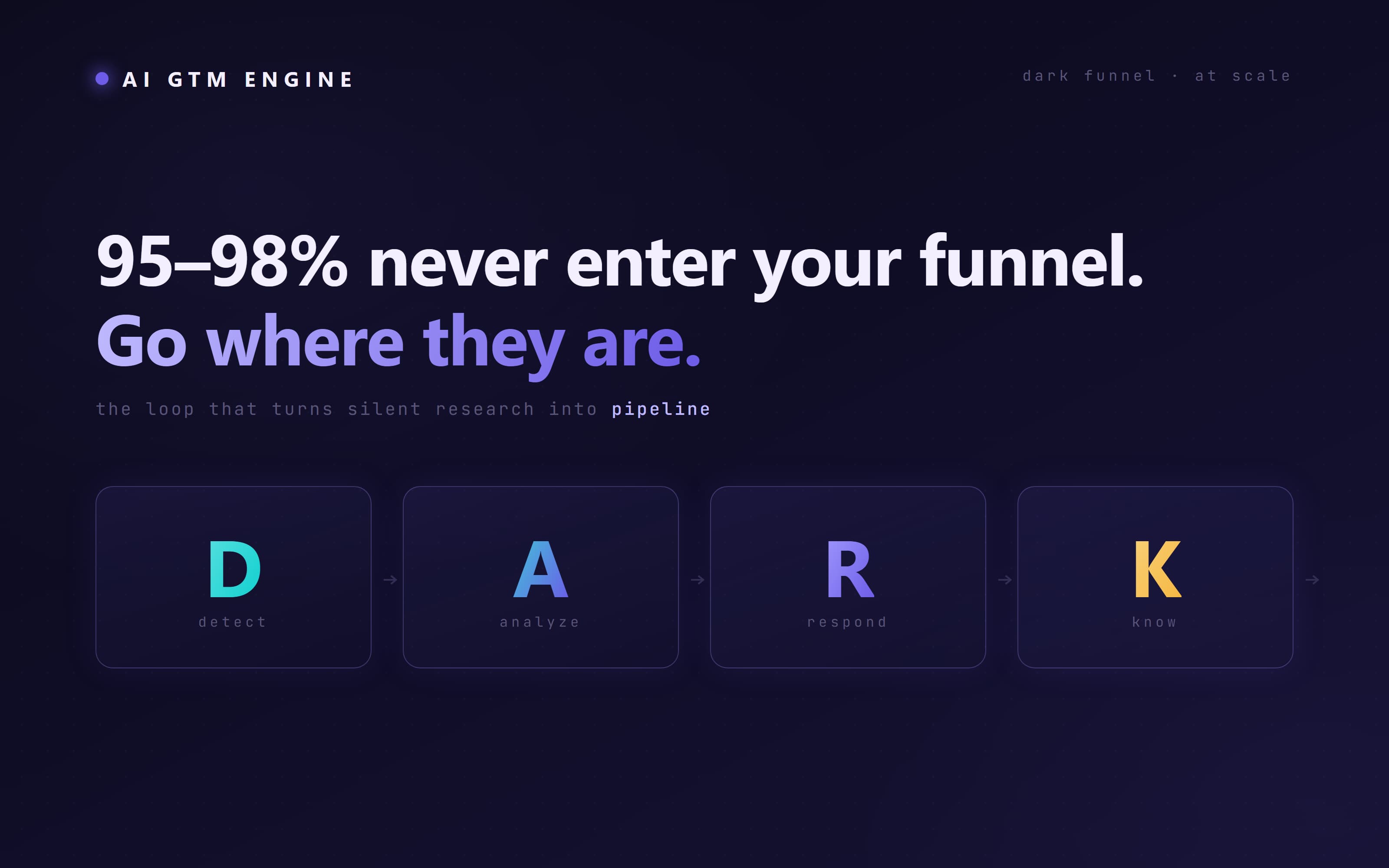
Your buyers are researching you before they talk to you. Are you showing up in the right places? Your CRM only sees the tip of the iceberg — form fills, demo requests, and cold replies. Below the surface sits the real research: G2 reviews, Slack communities, peer recommendations, LinkedIn lurking, and anonymous browsing.

- Active presence on Clutch, G2, and GoodFirms with recent, detailed reviews.
- Case studies that speak to specific industries and outcomes, not generic "we built an app" stories.
- Founder and leadership content on LinkedIn — buyers trust people, not company pages.
- Being mentioned in the communities where your buyers hang out: Slack groups, subreddits, and industry forums.
Where buying attention actually goes
of a B2B buyer's time is spent talking to suppliers
goes to reviews, peer input, and independent research
“B2B buyers spend only 17% of their time talking to suppliers. The rest? Reading reviews and asking peers you'll never meet.”
5. Automate the Follow-Up. Humanize the First Touch.
Most IT services companies do this backwards. They send a generic first email at scale, then a human follows up with a personalized message three days later. So flip it.
The flipped sequence
- Make the first touch personal and signal-triggered. Refer to a specific thing that made you reach out — the job posting, the funding round, the LinkedIn post, or the Clutch review they just received.
- Then automate the follow-up sequence for those who don't respond.
- Volume is the old game. Context is the new game.
The GTM Health Check for IT Services & Staffing Founders
Before you spend another dollar on outbound tools or SDR headcount, answer these honestly.
- Do you know which buying signals predict your best clients?
- Is your ICP based on real closed-won data, not assumptions?
- Does your outreach lead with outcomes, not capabilities?
- Are you visible on review platforms where your buyers research?
- Does your CRM show signal context, or just contact info?

Here's the Real Question
The IT services and staffing market is not getting less competitive. It's getting more crowded every year.
The companies that win won't be the ones with the biggest teams or the lowest rates. They'll be the ones who know who's ready to buy before anyone else does. Who shows up with context instead of cold pitches. Who builds trust in the places their buyers actually look.
That's not luck. That's GTM architecture. If you're ready to build it properly, that's exactly what we do at InsightsTap.
Ready to rebuild your GTM architecture?
If you scored below 3 out of 5 on the health check, your pipeline is sitting on a broken foundation. We help IT services and staffing teams build signal-led, outcome-first GTM systems that win before the discovery call.
Ready to turn signals into booked pipeline?
Book a discovery call and we’ll map out how a signal-led GTM system can accelerate your revenue.