How Will ABM, Demand Generation, and AI Shape the Future of B2B Marketing?

A complete beginner-to-advanced guide to ABM 2.0 — how Account-Based Marketing, Demand Generation, and Artificial Intelligence are converging to redefine how B2B companies attract, engage, and convert buyers.
Introduction
B2B marketing is undergoing the biggest transformation it has seen in decades. Traditional tactics that once worked — static campaigns, rigid workflows, and manual personalization — are rapidly losing effectiveness. At the same time, buyers are becoming more informed, more selective, and more resistant to generic marketing messages.
Three forces are shaping this transformation: Account-Based Marketing (ABM), Demand Generation (Demand Gen), and Artificial Intelligence (AI).
Individually, each of these strategies has existed for years. But when combined, they are redefining how B2B companies attract, engage, and convert buyers. This guide explains how ABM, Demand Gen, and AI are converging, why traditional ABM is becoming obsolete, and how AI-powered ABM (ABM 2.0) will define the future of B2B marketing.
The content is written in simple, structured English, suitable for:
- B2B founders
- SaaS marketers
- Sales and RevOps leaders
- Marketing students
- General readers interested in AI and business transformation
Understanding the B2B Marketing Landscape
What makes B2B marketing different? B2B marketing is fundamentally different from B2C marketing because:
- Buying decisions involve multiple stakeholders
- Sales cycles are long and complex
- Products are often high-ticket and customizable
- Trust and credibility matter more than brand popularity
Because of this complexity, B2B marketing relies heavily on data, personalization, relationship building, and sales and marketing alignment.
What Is Account-Based Marketing (ABM)?
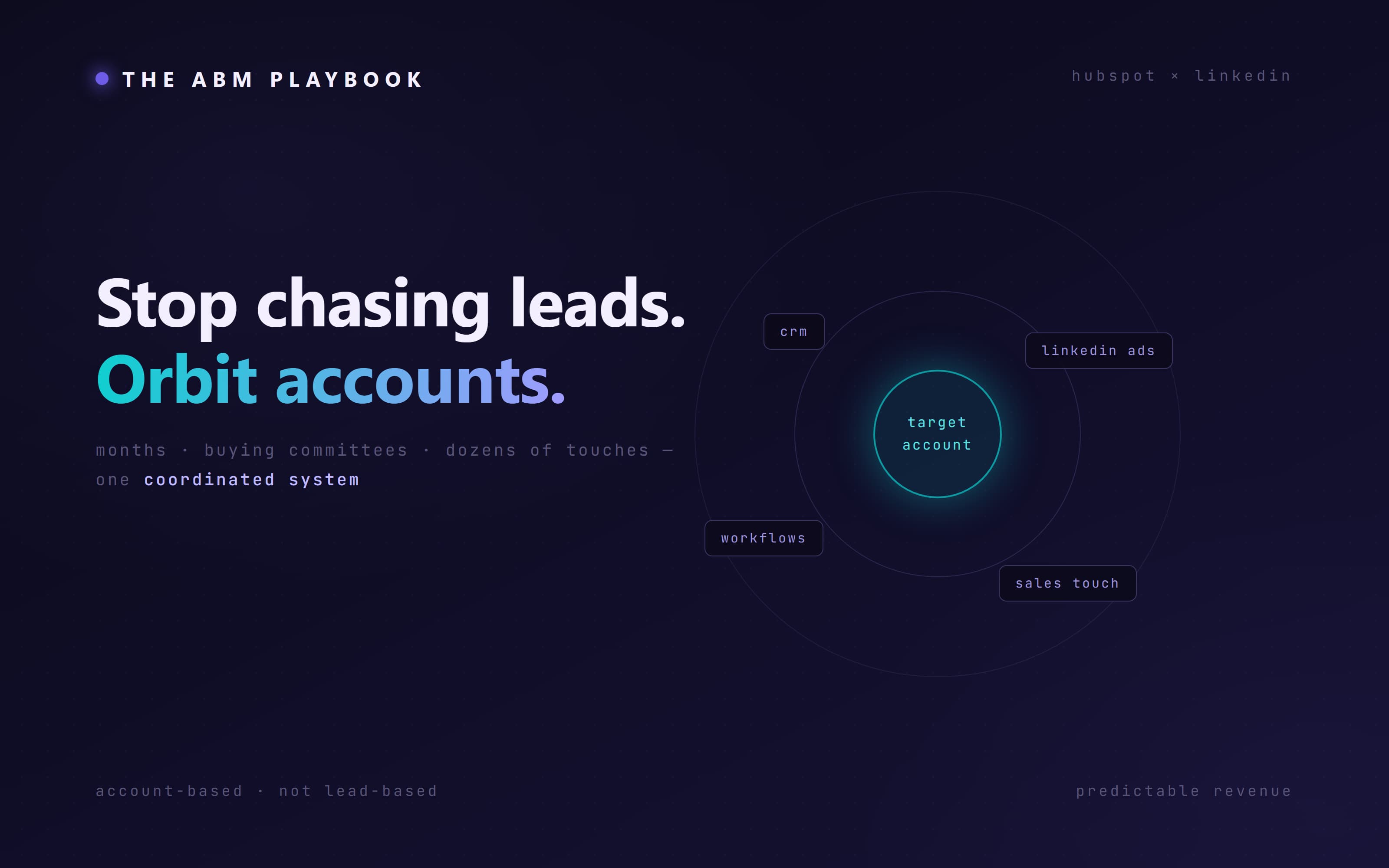
Account-Based Marketing (ABM) is a strategy where marketing and sales teams focus on specific target accounts instead of broad audiences.
Instead of asking, "How do we generate more leads?" ABM asks, "How do we win these exact accounts?"
The traditional ABM workflow
- Accounts are selected manually
- Campaigns are customized per segment
- Workflows are rule-based and rigid
- Personalization is limited
The traditional ABM model flows in one direction: Target Accounts → Manual Segmentation → Static Campaigns → Rule-Based Workflows → Delayed Sales Action. This approach worked — but only up to a point.
Why Traditional ABM Is Dying
Traditional ABM is not failing because it is wrong. It is failing because buyer behavior and technology have evolved.
The key limitations of old ABM:
- Rigid workflows
- Manual decision-making
- Static segmentation
- Slow optimization
- Limited personalization
Traditional systems depend on conditions, not intelligence. For example: "If the contact is a CEO, in the US, from healthcare → send email A." But real buyers don't behave in such predictable ways.
“Traditional ABM is not failing because it is wrong. It is failing because buyer behavior and technology have evolved.”

What Is Demand Generation (Demand Gen)?
Demand Generation is the process of creating awareness, interest, and intent for a product before a buyer is ready to purchase.
Demand Gen focuses on:
- Education
- Trust-building
- Long-term engagement
Unlike lead generation, demand generation does not rush buyers — it prepares them. The traditional Demand Gen funnel runs Awareness → Interest → Consideration → Lead → Opportunity. But this funnel assumes buyers move linearly — which is no longer true.
The Role of Artificial Intelligence in B2B Marketing
AI is not just another tool in the tech stack. It is a decision-making layer.
- Real-time learning from every interaction
- Dynamic personalization tuned to each contact
- Predictive analytics that anticipate intent
- Autonomous optimization that improves without manual tuning

The Core Shift: From Manual to Intelligent Workflows
Manual workflows are predefined, rule-based, and sequential — a simple chain of Trigger → Condition → Action → End. They require humans to predict every scenario, define every rule, and update workflows manually.
The limitations of manual workflows:
- Cannot adapt in real time
- Break when conditions change
- Depend heavily on human assumptions
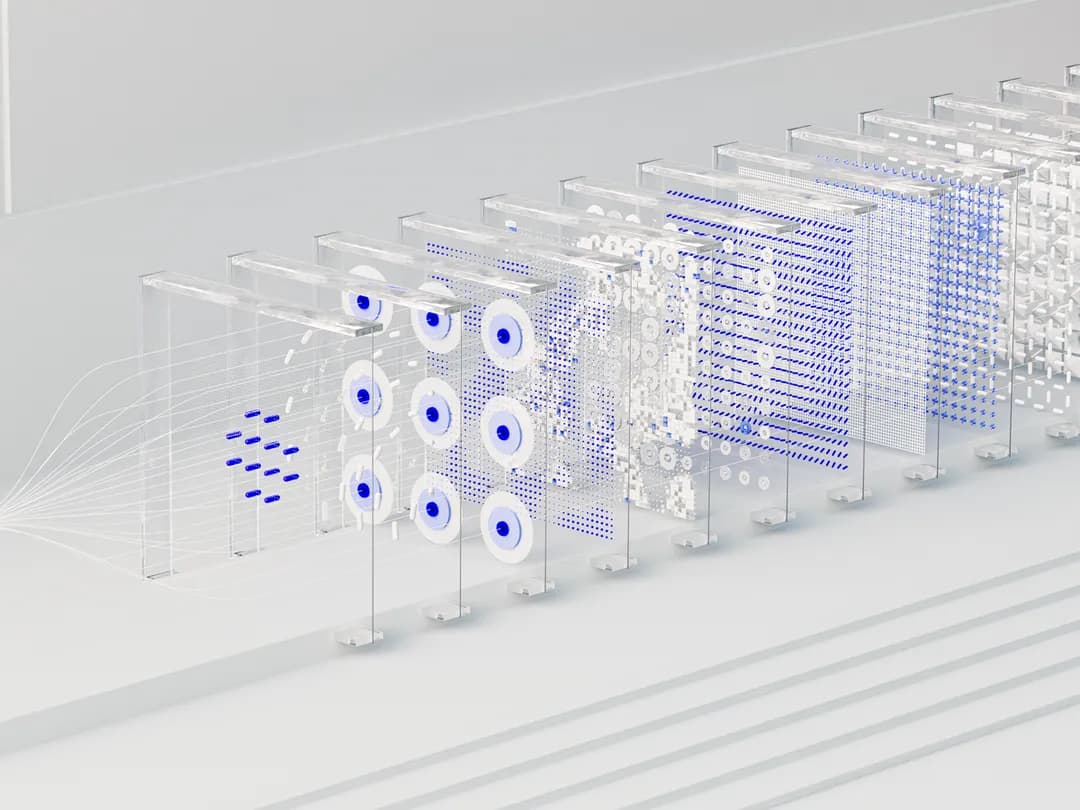
What intelligent (AI-driven) workflows do differently
- Learn from data instead of waiting for human input
- Adapt dynamically as buyer behavior shifts
- Optimize in real time rather than on a manual review cycle
Instead of fixed rules, AI evaluates probability and intent. The intelligent workflow model flows as Trigger → Data Enrichment → AI Decision Engine → Best Action Selected → Execution via Automation → Learning & Optimization — a loop that gets smarter with every cycle.
Why Intelligent Workflows Are a Game Changer
The key advantages of AI-driven workflows:
- Dynamic decision-making
- Predictive scoring
- Real-time personalization
- Continuous self-learning
With these capabilities, AI can identify hidden decision-makers, choose the best channel (email, LinkedIn, WhatsApp), and adapt messaging instantly.
Predictive Scoring: Beyond Manual Lead Scoring
Traditional lead scoring is rigid and incomplete: Job Title = CEO → +10, Industry = Healthcare → +10, Location = US → +5. It treats static attributes as the whole story.
- Behavioral signals across channels
- Engagement patterns over time
- Historical conversions from similar accounts
- Similar buyer journeys used as a predictive baseline
The result of AI-based predictive scoring is dynamic probability scores, not static points — a live read on how likely each account is to convert, rather than a frozen tally of attributes.
The Evolution of A/B Testing
A/B testing compares two versions of a campaign element to see which performs better. Traditional A/B testing is slow, manual, and limited to 2-3 variants.
With AI-powered multivariate testing:
- Hundreds of variations can run simultaneously
- Optimization happens in real time
- Winning patterns emerge automatically
The shift is from "A vs B → Winner → Repeat" to "A-Z Variations → Real-Time Analysis → Continuous Optimization."
Personalization at Scale: The New Standard
Different roles care about different outcomes. Generic messaging fails because it ignores context.
- CFO → Cost & ROI
- CIO → Systems & Security
- COO → Efficiency & Scale
Traditional personalization stopped at first name, company name, and an industry mention — and even that required manual research, virtual assistants, and significant effort.
What AI-driven personalization at scale can do
- Pull CRM data automatically
- Enrich profiles via APIs
- Analyze LinkedIn activity
- Adapt tone and messaging dynamically

The result is one-to-one personalization for thousands of contacts. Where traditional segmentation split buyers into a Finance segment, an IT segment, and a Sales segment, AI segmentation builds one persona per individual — continuously updated and behavior-driven.
“AI segmentation means one persona per individual — continuously updated and behavior-driven, not a fixed bucket.”
Orchestration and Automation: The Backbone of ABM 2.0
AI does not execute tasks — it decides. Execution still requires automation platforms, workflow engines, and integrations. This is where orchestration becomes critical.
New-age platforms enable agile automation through:
- No-code / low-code workflows
- API-first architecture
- AI-ready design
Examples include Clay and n8n. These platforms connect CRMs, data tools, AI models, and outreach systems into a single orchestrated flow.
The Rise of GTM Engineering
GTM (Go-To-Market) Engineering is the fusion of marketing, sales, data, and engineering.
Automation in Action: A Real Use Case
Consider a single intent-driven workflow, end to end:

From website visit to outreach in minutes
- A prospect makes a website or G2 visit
- The intent signal is captured
- The company is identified
- Decision-makers are found
- AI personalizes the message
- A sales alert is triggered
- Outreach is executed automatically
“This happens in minutes, not days.”
The Importance of Data Foundations
AI is only as good as the data it consumes.
Common data problems:
- Data scattered across tools
- Outdated records
- Inconsistent formats
The solution is a Unified Customer Data Profile — a single source of truth that includes CRM data, product usage data, website behavior, and third-party enrichment. The goal is a 360-degree view where CRM, Product, Website, and Intent data feed one unified profile that feeds the AI.
Intent Signals: The Fuel of ABM 2.0
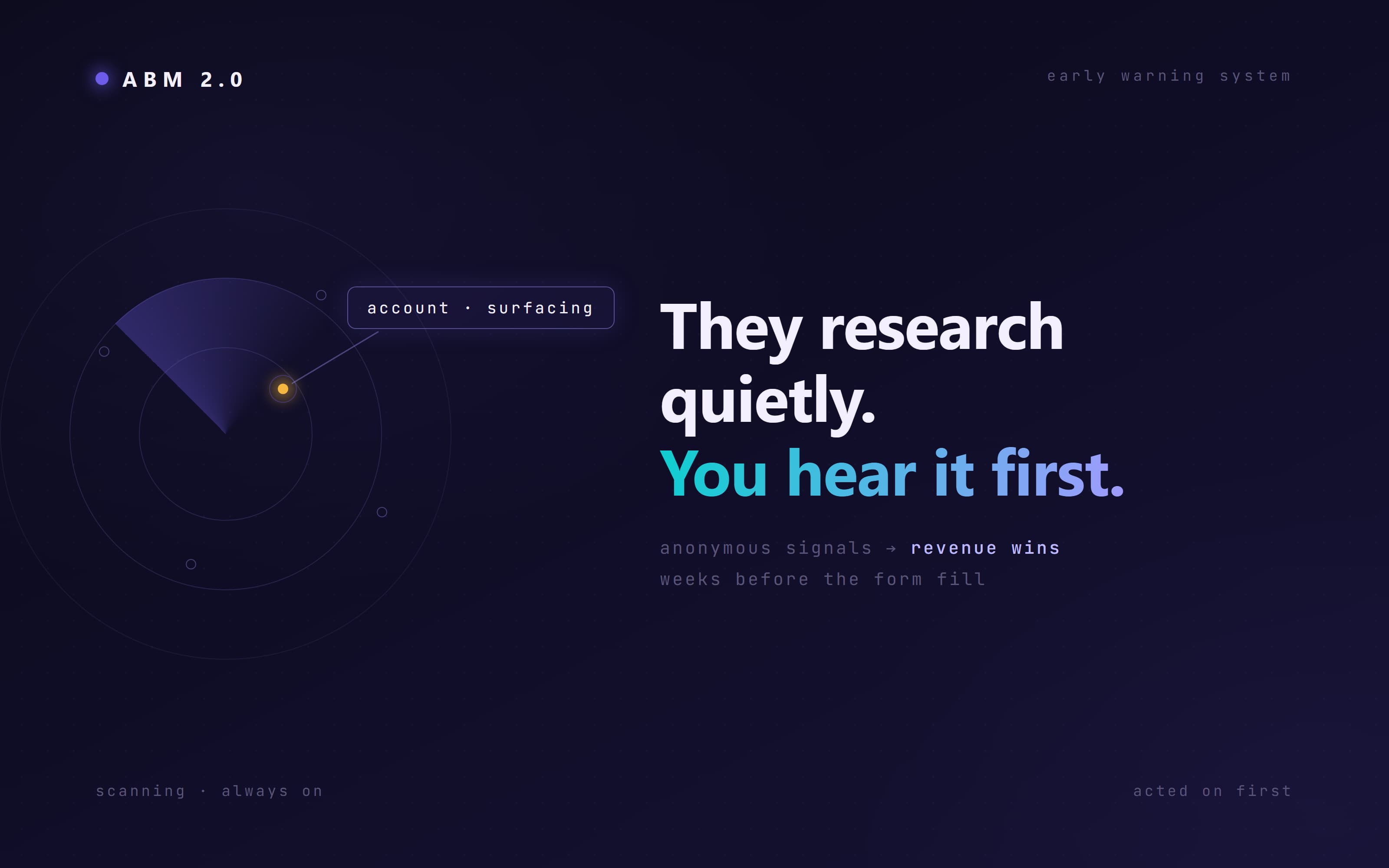
Intent signals are what tell you a buyer is in motion before they ever raise a hand. They include:

- Website visits
- Content downloads
- G2 profile views
- Job postings
- Tech stack changes
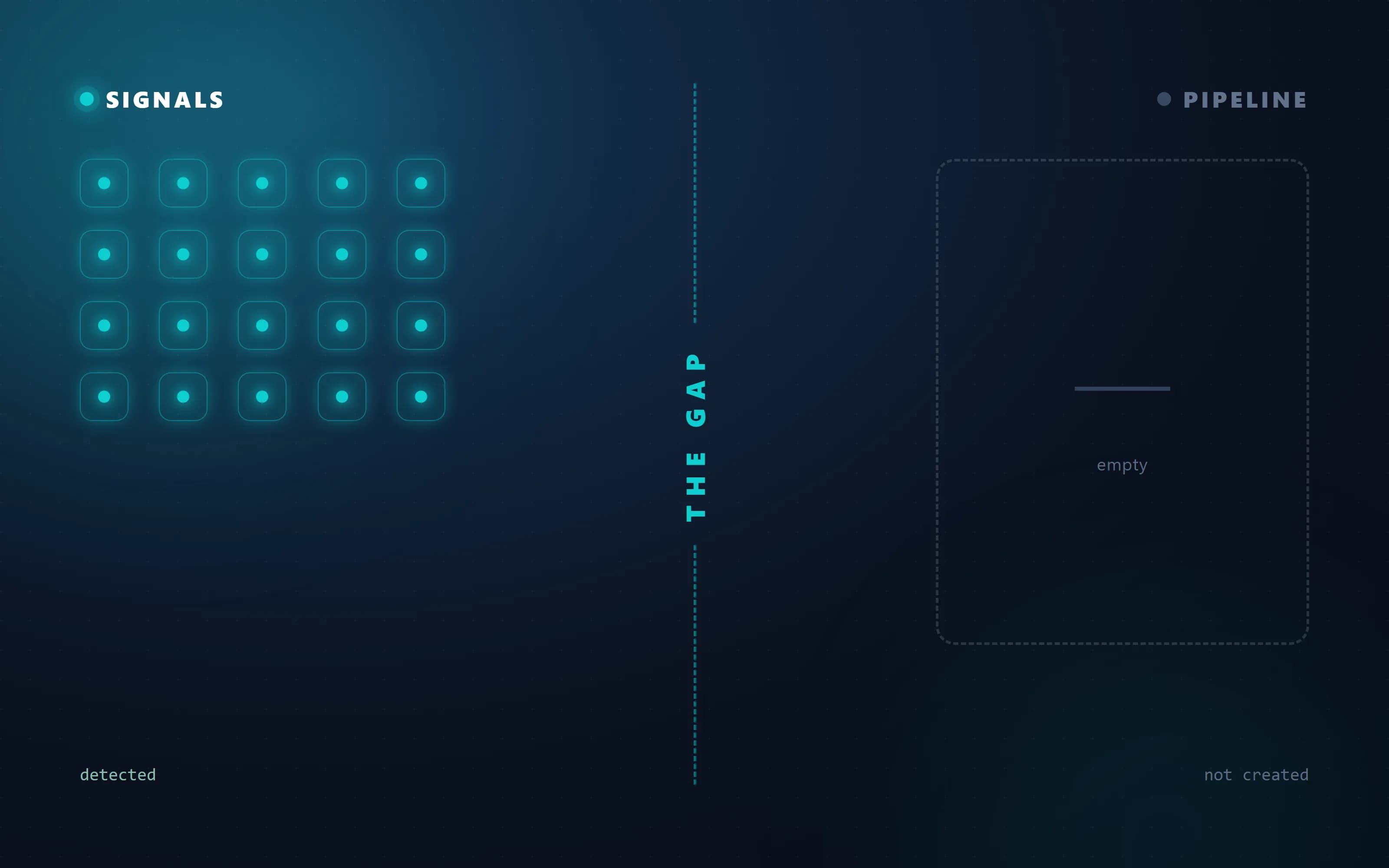
AI enables real-time intent capture and action. This drives a shift from reactive to proactive B2B marketing: the traditional model was "Wait for form fill → React," while the new model is "Detect intent → Act immediately." This shift dramatically improves conversion rates.
Turning Signals into Revenue Actions
AI and humans divide the work — each doing what it does best.
AI handles the heavy lifting
- Interpret intent from raw signals
- Prioritize accounts by likelihood to convert
- Trigger outreach at the right moment
- Notify sales teams with full context
That frees sales to focus on conversations, proposals, and closing — while AI handles monitoring, analysis, and timing.
ABM 2.0: The Future of B2B Marketing
The key characteristics of ABM 2.0:
- AI-driven decision making
- Real-time intent capture
- Adaptive workflows
- Hyper-personalization
- Sales and marketing alignment
The ABM 2.0 framework runs as a connected pipeline: Data Foundation → Intent Signals → AI Decision Engine → Intelligent Workflows → Personalized Engagement → Revenue Impact.
Conclusion
The future of B2B marketing lies at the intersection of ABM, Demand Generation, and Artificial Intelligence. Traditional ABM is giving way to ABM 2.0 — a smarter, faster, and more adaptive approach powered by AI, real-time data, and intelligent automation.
Companies that invest early in data foundations, intelligent workflows, and AI-powered personalization will gain a decisive competitive advantage in the next 2-5 years. The transformation has already begun.
Build your ABM 2.0 engine before your competitors do
Companies that invest early in data foundations, intelligent workflows, and AI-powered personalization will gain a decisive edge in the next 2-5 years. We help B2B teams make that shift.
Ready to turn signals into booked pipeline?
Book a discovery call and we’ll map out how a signal-led GTM system can accelerate your revenue.